Work / Systems mapping
Crisis of the Free Press: A System Map
A map of the forces behind the collapse of local news and its effect on democracy, built from years of workshops and expert interviews.
The Wicked Problem Task Force is a think tank led by Heather Chaplin, started with a 2016 Knight Foundation grant to look at the problems facing journalism from 20,000 feet. A “wicked problem” is a policy term for a problem so tangled that ordinary problem-solving doesn’t work on it.
This map came out of dozens of workshops with Heather Chaplin, Rajesh Bilimora, Eli Pariser, Kayla Christopherson, me, and other scholars. We tried to surface and document every factor at play in the crisis of the free press. The first version was from around 2017. We updated it in 2024.
Mapping the space
We needed our own framework first. This meta-map shows the first-order forces that are always in play.
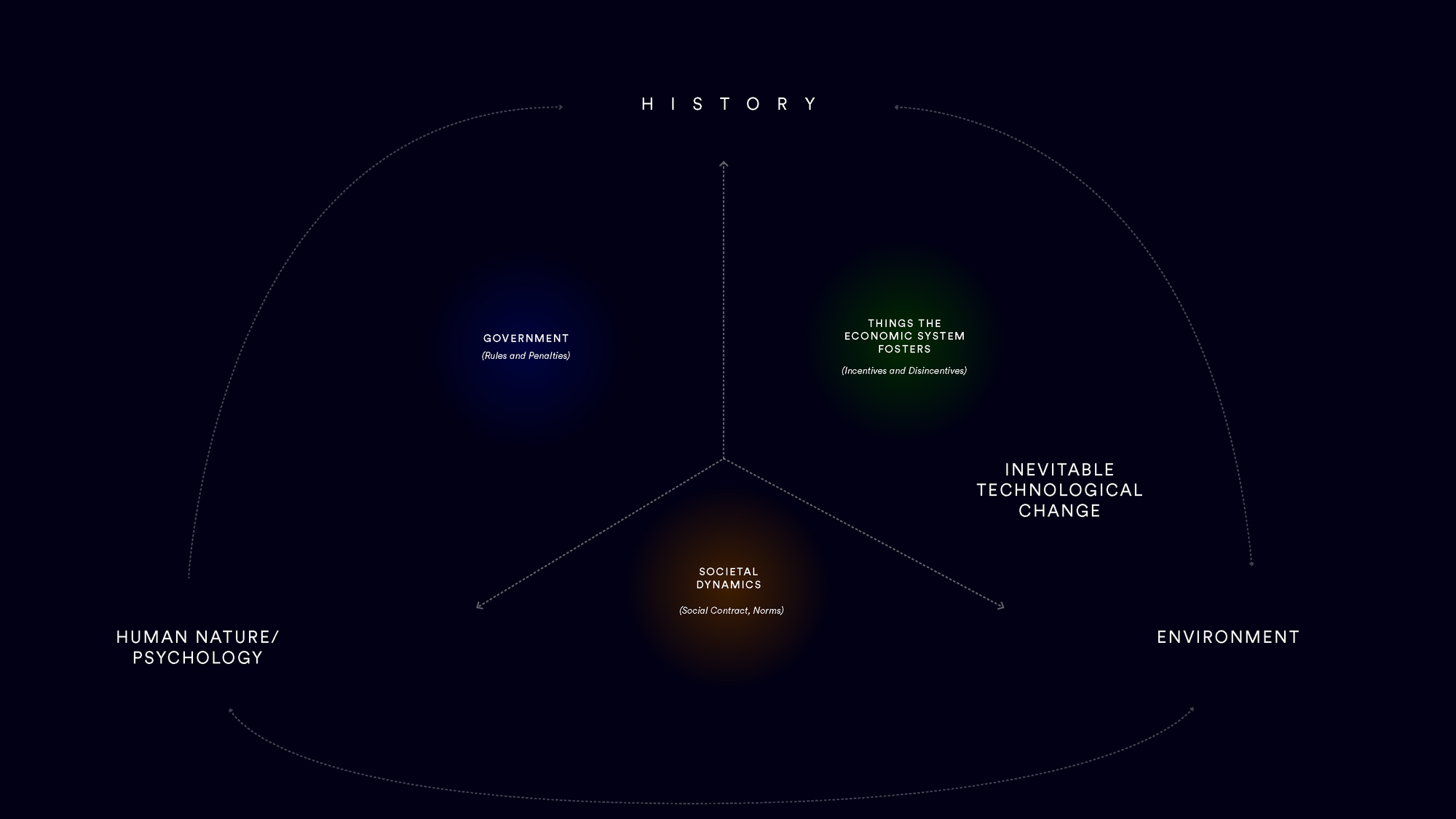
Our north star: a resilient free press is the palladium of democracy.
We drew the boundaries tight: journalism and media, the United States, local and mid-size publications, mostly print.
Workshops



The full map
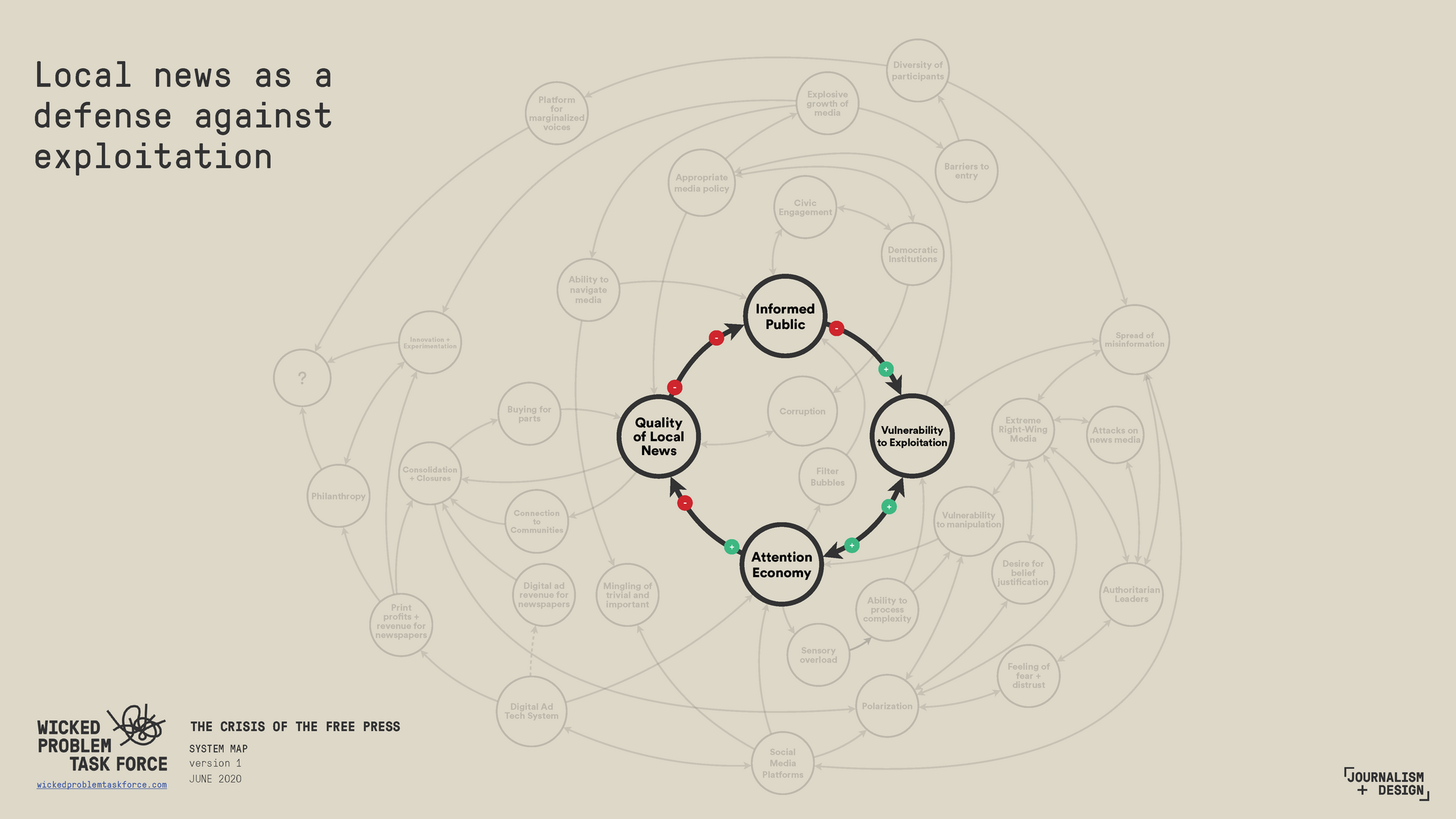
The core story
The free press is a means, not the end. What’s at stake is the public’s vulnerability to exploitation. The attention economy makes us more vulnerable. And the more vulnerable we are, the stronger the attention economy gets.
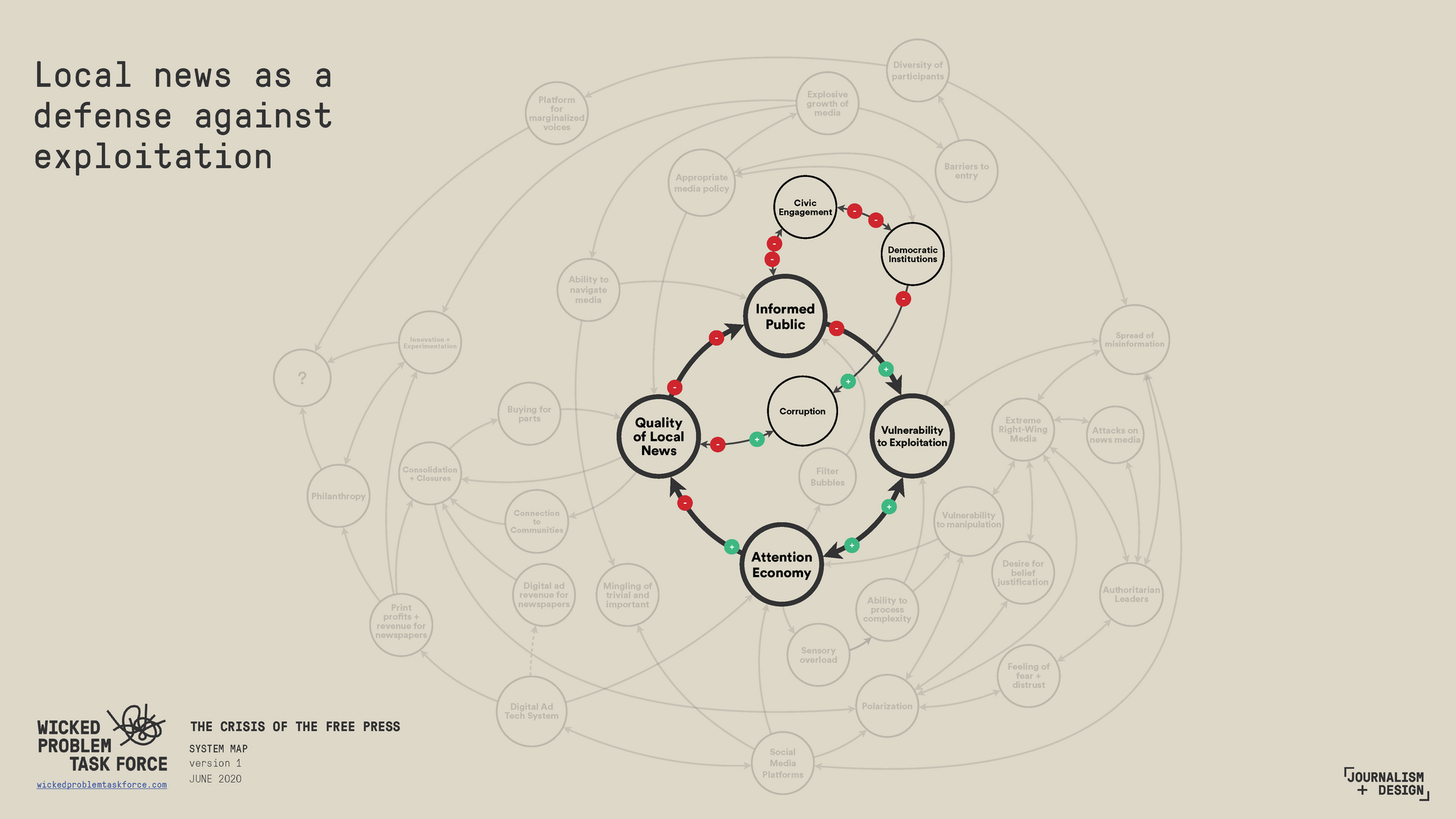
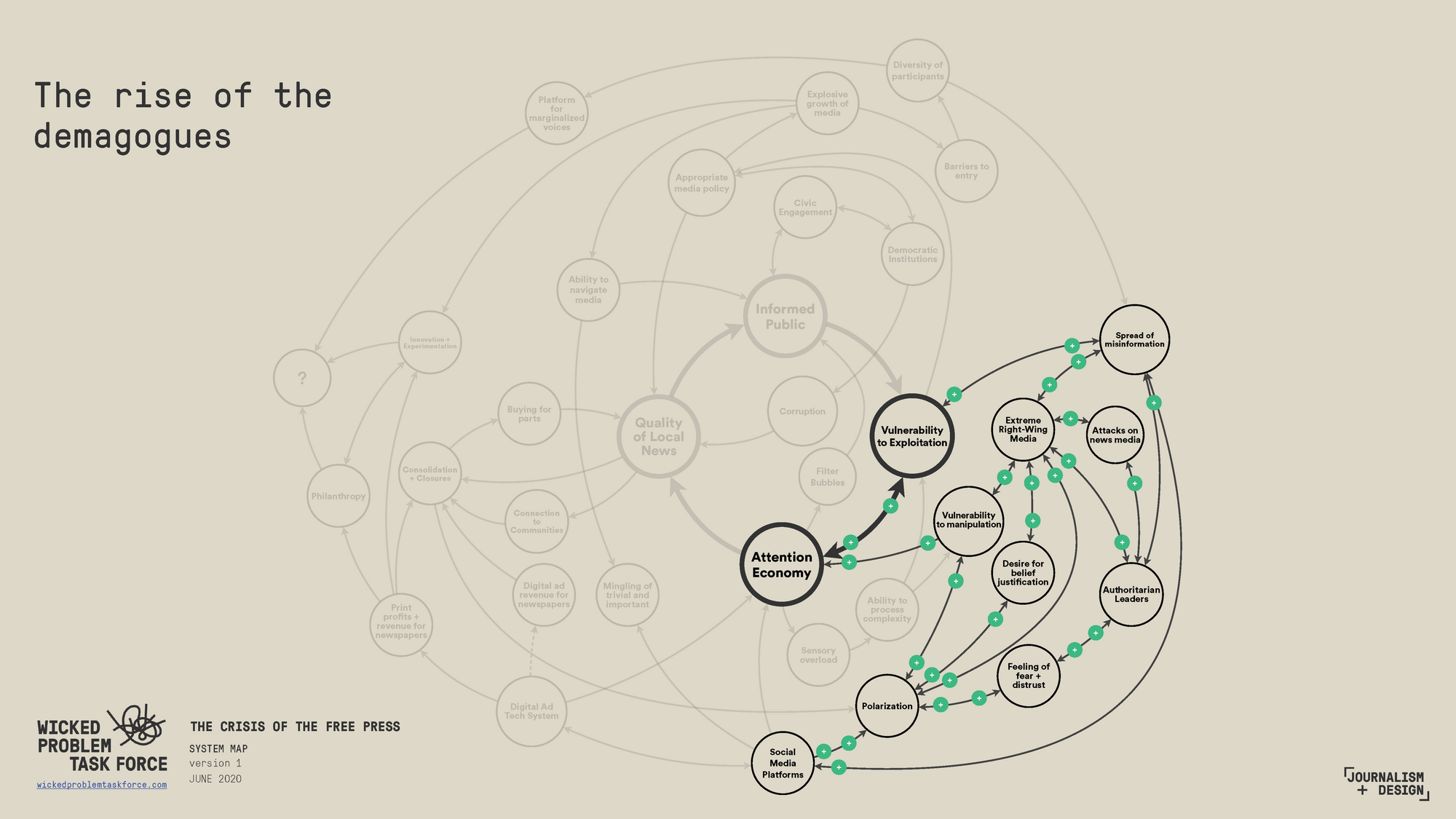
Neighborhoods
Around the core story we found smaller loops, or neighborhoods, that matched trends we were seeing in our research.


I also designed the interface for a dynamic simulation based on the map, programmed by Francis Tseng. See the Journalism Ecosystem Model.